
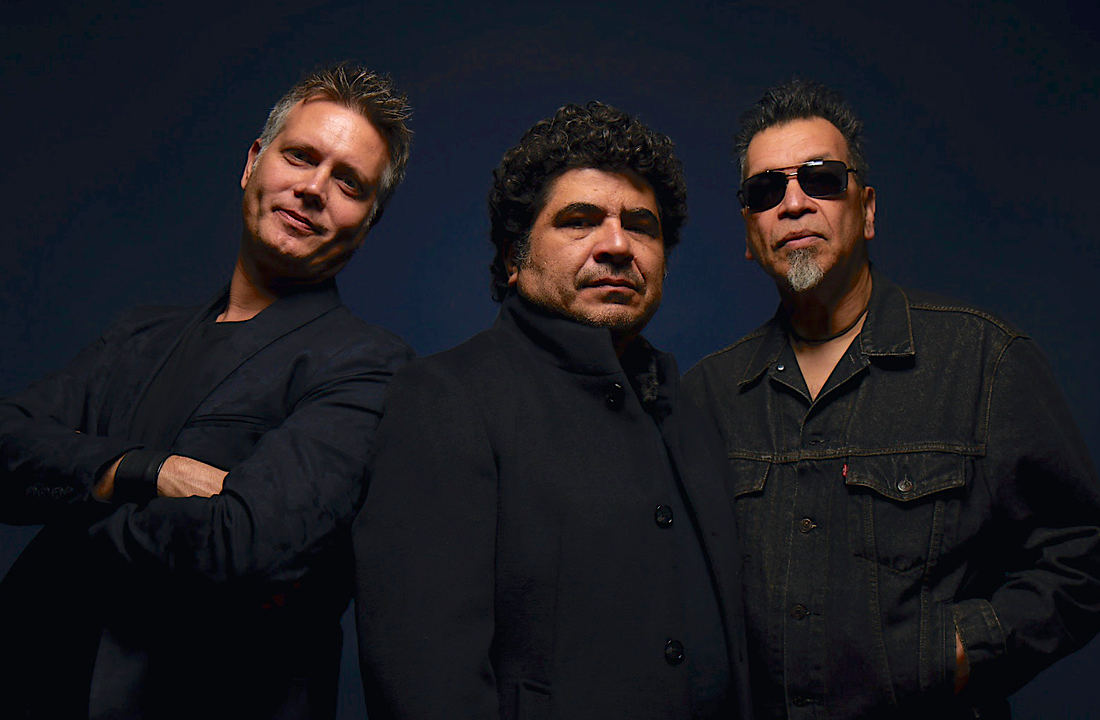
 Low end powerhouse and former Yellowjacket backbone, Jimmy Haslip collaborates with pianist, composer, arranger and educator Otmaro Ruíz and virtuosic rhythm guru Jimmy Branly for a project that is a perfect mix of composition and broad audience appeal. Mastered by Grammy nominee Rich Breen (Herbie Hancock, Norah Jones, Peter Erskine, Charlie Haden and more), "elemental" is a current jazz classic bringing elements of old and new to keep fans on their toes. Grammy nominee Otmaro Ruíz (2016), composer of most of the "elemental" tracks, holds an honorary doctorate from Shepherd University and has played with all the modern greats...Gino Vannelli, John McLaughlin, Tito Puente, Steve Winwood, John Patitucci, Vinnie Colaiuta just to name a few. Mr. Ruíz is regarded as one of the most sought-after keyboardists on the scene yet still finds time for teaching. He is a frequent guest clinician at Los Angeles Music Academy and Musician's Institute. Jimmy Branly is from Cuba and began his studies at the Conservatory of Music in Havana Adolfo Guzman and ENA (National School of Art). Mr. Branly also has played with greats from all genres including Colin Hay, Abraham Laboriel, Michael Nezmith, John Patitucci, Doc Severinsen, Ricky Martin, Andy Garcia, Natalie Cole, Gloria Estefan, Emilio Estefan. He performed at The White House in 2013 a Latin presentation for President Obama. Jimmy Haslip was a founding member and 32 year band mate of The Yellowjackets. Mr. Haslip has been nominated for 22 Grammy awards and has won 3. Over his 50+ years of playing, he has contributed to the biggest names in music over a plethora of genres (Jeff Lorber, David Sanborn, Jerry Garcia, Bruce Hornsby, Chaka Khan, Allan Holdsworth, Oz Noy to name a few) 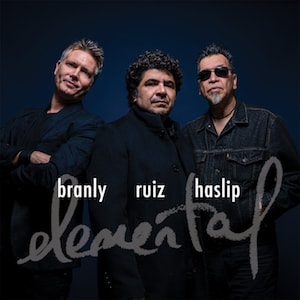 "Elemental" opens with "A Good Start" and right out of the gate leaves listeners slack-jawed. The high energy mover leads with dramatic injections from both Mr. Branly and Mr. Ruíz. These lyrical jabs give way to a simple, soaring melody on keyboards that establishes the emotional trajectory for the rest of the song. The trio brings the audience up then down then back up again all the while compelling exquisite anticipation. The troupe rewards in the end with a crescendo of harmonic punches as "A Good Start" gives way to "Greed". "Greed" leads with a coy, sly keyboard melody that is enticing. Mr. Branly and Mr. Haslip jump in quickly in a way that are both supportive and improvisational. The listener is left with a slightly uneasy feeling as the rhythm's presence rolls up and down and moves from support to spontaneous until Mr. Haslip steps out with a subdued but perfect solo. Mr. Branly rounds things out and brings it in as Mr. Ruíz's keyboards sail home. "Elemental" is a fusion of the most talented jazz artists of our time. More than that, though, the resulting sound is clearly greater than the sum of it's parts. When asked to comment on the compilation, Otmaro Ruíz thought carefully and stated simply, "Music for All". Indeed...music for all.
Grammy-nominated Pianist/Composer Otmaro Ruiz, Drummer Jimmy Branly and Bassist Jimmy Haslip team up together to create an incredible jazz trio album titled, "Elemental". Available on 11/23/2018 ARTIST INFOALBUM PAGE
Low end powerhouse and former Yellowjacket backbone, Jimmy Haslip collaborates with Scott Kinsey (Tribal Tech) and Hungarian superstar and session guru Gergö Borlai to create the best jazz release of this decade. ARC Trio features guest appearances by Vinnie Colaiuta, Gary Novak, Steve Tavaglione and Judd Miller and delivers unbelievably listenable virtuosity.
Jimmy Haslip was a founding member and 32 year band mate of The Yellowjackets. Mr. Haslip has been nominated for 22 Grammy awards and has won 3. Over his 50+ years of playing, he has contributed to the biggest names in music over a plethora of genres. To list a few:
• Jazz: Al Jarreau, John Scofield, Pat Metheny, Bill Evans, Randy Brecker, Toots Thielemans • Smooth Jazz: David Sanborn, Kenny G, Michael Bolton, The Rippingtons • Fusion: The Yellowjackets, Peter Erskine, Bela Fleck, Jeff Lorber, Allan Holdsworth and Alan Pasqua • Rock: Joe Cocker, Rod Stewart, George Harrison, Crosby, Stills & Nash, Jerry Garcia, Joe Walsh, Tommy Bolin and Gary Wright • Pop: Randy Newman, Bruce Hornsby, Kenny Loggins, Dusty Springfield, Gino Vannelli and Herb Alpert • Soul: Chaka Khan, Diana Ross, Anita Baker and Roy Ayers Ubiquity • Blues: Robben Ford, Oz Noy, Robert Cray and Harvey Mandel
A two-decade veteran of Tribal Tech, one of the most influential electric jazz groups, keyboard wizard Scott Kinsey has worked with many of the world’s greatest musicians including Scott Henderson, John McLaughlin, Oz Noy, Kurt Rosenwinkel, Gary Willis, Mike Stern, Matthew Garrison, Michael Landau, Nicholas Payton, Hadrien Feraud, Louis Cole, Tim Lefevbre, Dave Weckl, Dennis Chambers and many others. He is considered a protégé of jazz icon Joe Zawinul, with whom he collaborated for several years.
Hungarian drummer Gergö Borlai began playing at age 3 and has appeared on more than 300 albums. Since 2012, Mr. Borlai is a professor at the Liceu Academy/Jazz Departement in Barcelona and has received two lifetime achievement awards, the Golden Drumstick Prize and the Artisjus Lifetime Achievement Award in Hungary. He has played with greats such as Al DiMeola and Hiram Bullock.
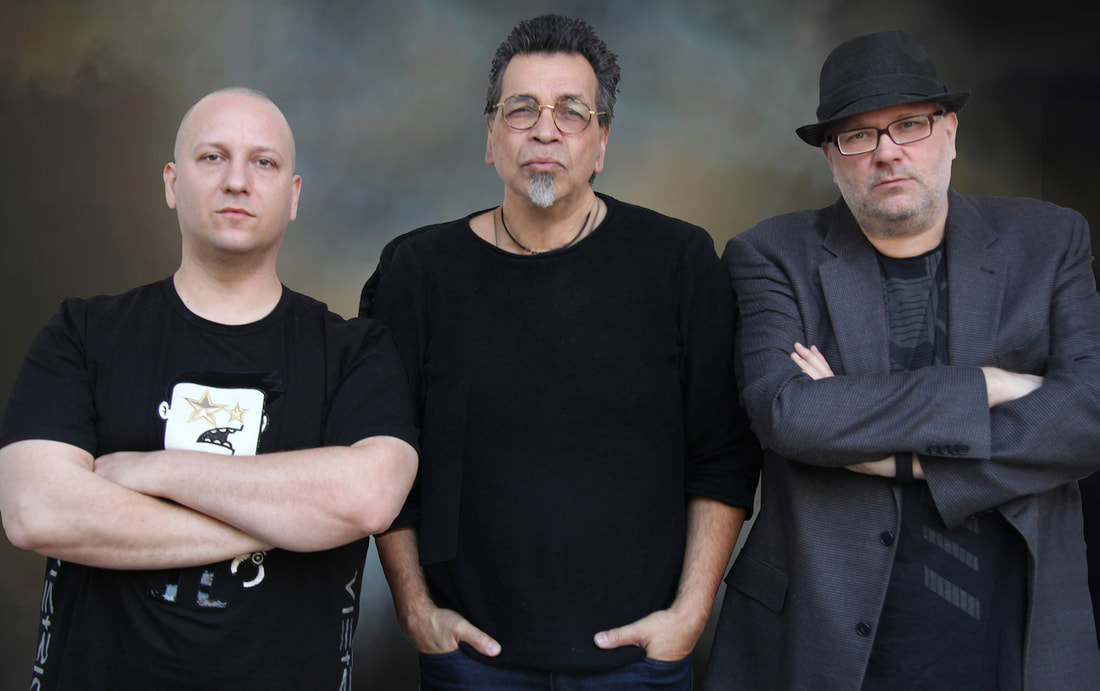
From L to R: Gergö Borlai, Jimmy Haslip and Scott Kinsey
ARC Trio opens with "Owosso" as Mr. Borlai places the listener under his spell with a rhythmic trance-like groove. Slowly, Mr. Haslip enters with his hypnotic response in lock-step with Scott Kinsey's subtle assurance on keys. When asked about Arc Trio, Mr. Haslip says, "I wrote music that deals with deeper emotional experiences...searching for knowledge and opening my awareness of a world in need". Certainly, a song like "Owosso" fits this bill and is timely in these contentious times.
The dynamic flow of ARC Trio leads followers skillfully to track four, "Viera", a song about Mr. Haslip's mother. At this point, the core trio makes introduction to guests that need no introduction. The soulful strength of Vinnie Colaiuta (Frank Zappa, Sting, Herbie Hancock, Jeff Beck, many others) on drums and Latin fusion hero Steve Tavaglione (Jorge Strunz, Eduardo Del Barrio, Dave Weckl, Sly & The Family Stone, Steve Winwood) on flute. This powerful tribute starts with distinct Latin rhythm and brings in Mr. Tavaglione' soaring injections. It is chaotic at first before locking in tightly and fusing genres and styles. The interplay of flute and keyboard melody is masterful on the a palette of constantly evolving drum and bass improvisation.
ARC Trio is the biggest sound you will hear this year. The fusion of gratifying sounds, feels and styles leaves one satisfied yet craving more. When asked about live performances relating to this masterpiece, Jimmy Haslip exclaimed without hesitation, "ROCK THE HOUSE". Hold on...it's going to be wild ride!
Artist Page: Jimmy Haslip | Scott Kinsey | Gergo Borlai
Album Page: ARC Trio
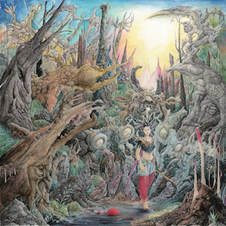 Blue Canoe Records releases “Cody Carpenter’s Interdependence”, the debut effort from Cody Carpenter on January 26th, 2018. Mr. Carpenter combines the best of 80’s synth-pop with the jazz / rock fusion of that time to create a complex, breakneck brew that both inspires and energizes.  Photo Credit: Joakim Reimer Photo Credit: Joakim Reimer Cody Carpenter is the son of Adrienne Barbeau, a star of film, television and the Broadway stage, and legendary Academy Award winning writer, actor, composer, producer and director John Carpenter. The Senior Carpenter is best known for classic horror films (Halloween, The Fog, The Thing) and sci-fi thrillers (Escape From new York, Starman). As a composer, he is known for synthesizer-based pieces and is perhaps best known for the theme song to the movie Halloween (1978). It is not difficult to see how Cody Carpenter comes by his synthesizer based compositions. Cody was introduced to his first musical instrument around the age of three and has been playing and composing original music ever since. In addition to contributing music for two of his father’s films, Vampires (1998) and Ghosts of Mars (2001), Carpenter composed and performed the full-length score for “Cigarette Burns” and “Pro-Life” in Showtime’s Masters of Horror (2005) movie series. Cody co-wrote, co-produced, and performed on the acclaimed Lost Themes (2015) and Lost Themes II (2016) with his father and Daniel Davies. In 2016 and 2017 Cody toured North America and Europe with his father and a six piece band, performing material from both Lost Themes albums and his father’s films.  Cody Carpenter opens his debut with the expansive track “Jinrai Fuuretsu”. The Emerson Lake and Palmer drenched opener rushes out of the gate like a tornado. Mr Carpenter’s driving synth melody bashes up against the phenomenal rhythm section of Scott Seiver (drums) and Jimmy Haslip (bass). Mr. Seiver has worked with current pop stars including Aimee Mann, Jack Johnson and Jason Mraz. He also drummed on Grammy award winning recordings for Tenacious D and Flight of the Conchords. Mr. Haslip was a founding member of jazz fusion superstars The Yellowjackets and has worked with Bruce Hornsby, Chaka Khan, Al Jarreau and Donald Fagen among others. The track opens powerfully and then soars wistfully before Mr. Carpenter drives the listener back home to its powerful opening theme…only to spin back to a thoughtful passage. The track resolves only to leave the listener yearning for further insight. Another track of note is “Thinking Of What Might Be”. Mr. Carpenter’s gracious synth melody drifts out in front of the tight, pulsating rhythmic punches. While much of Cody’s music is fairly complex, this straight-forward tune harkens a daydream on a sunny afternoon. Mr. Carpenter even steps out with a contemplative guitar solo midway through that sits perfectly afloat on the steady rhythmic offering. “Cody Carpenter’s Interdependence” is a brilliant entry for Cody Carpenter that has been a long time coming. Drawing on the many years of playing with John Carpenter and his accomplices, Cody finds his own unique voice all while the accepting the independence he has come by honestly. “Cody Carpenter’s Interdependence” deserves a serious listen. Cody Carpenter's Official Website: CodyCarpenterOfficial.com
Atlanta, GA (April 29th, 2016) - Blue Canoe Records has released “Marbles From A Drawer”, from versatile keyboard player David Ellington. “Marbles From A Drawer”, produced by Coy Bowles of Zac Brown Band, features many acclaimed guests and focuses on smoky, keyboard-based blues that is contemporary while still maintaining an old school presence. 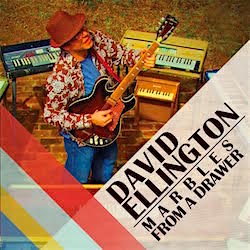 David Ellington grew up in Connecticut learning in as many musical situations as possible. From garage bands to church and school bands, he viewed all of these musical experiences as ways to learn. After high school, Mr. Ellington continued his education in Boston at Berklee College of Music. He moved to New Orleans, Louisiana in 1983 where he played and recorded with many local legends including Walter “Wolfman” Washington and Troi Bechet among others. Mr. Ellington also created afro- cuban jazz group Chevere during his time in New Orleans. Cheer recording “Baila Mi Ritmo” was chosen by Times Picayune music critic Keith Spera as one of the Top 20 recordings of 2001. During this time, he continued learning as he studied under Ellis Marsalis. “Marbles From A Drawer” begins in sultry fashion with “Goin’ To Church”. Mr. Ellington captures the listener’s ear with an expanding groove that gets deeper and funkier as the track breathes. It fills senses while remaining simple at heart. As the keyboard foundation gives way to a sizzling guitar solo, the interplay between players gets bigger while maintaining its simplicity and catchy feel. At the end, the audience is left wanting more while their feet are still tapping. On “98 Bottles”, Mr. Ellington features Clay Cook on vocals. Mr. Cook is famous for co- writing hits with John Mayer including “No Such Thing” which won the 2003 ASCAP award for Most Performed Song. “98 Bottles” is a melancholy song about waiting remorsefully for a lost love. The haunting keyboard textures add to the wistful regret as the vocals build and fade. Ellington and Cook combine to move the listener as the track ends in a dream-like fade. “Fool” is another notable track that features Oliver Wood (The Wood Brothers) on vocals. Mr. Ellington leads on a journey of honesty and regret that can be tasted in Wood’s voice. In admitting shortcomings and questioning self-worth, David Ellington exposes our human existence with these universal themes while Olive Wood brings those emotions to heart. “Marbles From A Drawer” is a masterful compilation that brings together brilliant songwriting with traditional blues, modern Americana and classic could all while exploring common themes of our human experience. David Ellington does all of this and packages it in a very accessible way that demands use of the replay button. “Marbles From A Drawer” is a stirring and impassioned release that will have the listener looking to hear more from David Ellington. 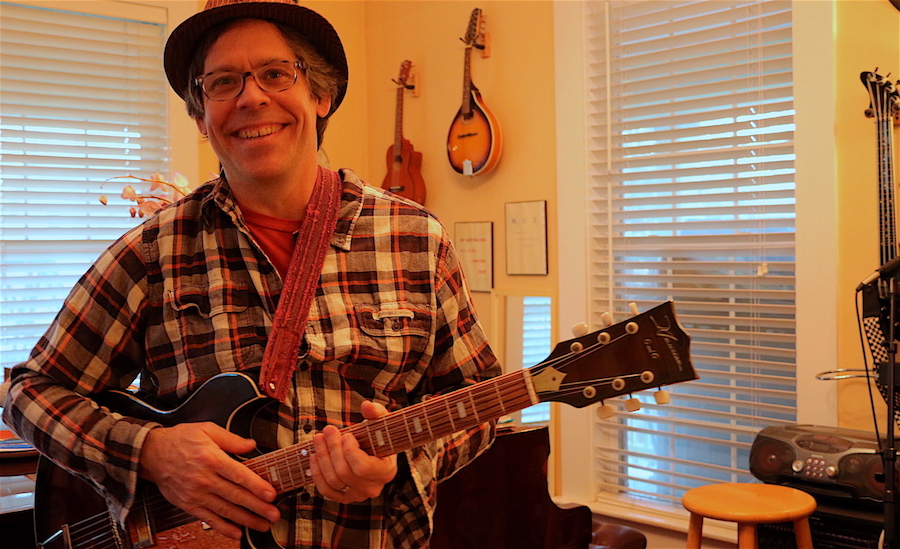 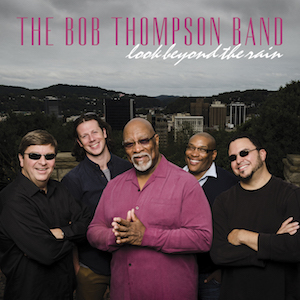 Blue Canoe Records has released “Look Beyond The Rain” from veteran piano man Bob Thompson and The Bob Thompson Band. Mr. Thompson brings the optimism in a funky way with the help of legendary producer and long-time friend, Buzz Amato (Curtis Mayfield, Ben E. King, Kriss Kross). Referring to the theme of the album, Thompson asserts, “It is going to rain sometime on your life but you have to look beyond that. This music spreads love and makes people feel good.” Bob Thompson is a performer, band leader, and educator and is a staple in the music of West Virginia. A native of New York, Mr. Thompson came to West Virginia to study trumpet at West Virginia State University. In 1991, Bob joined the West Virginia Public Broadcasting's ground breaking "Mountain Stage", as house pianist and featured artist. He is also co-producer of Joy To The World, a Holiday Jazz Show broadcast on public radio nationwide (since 1992), heard internationally on Voice Of America and was just inducted into the West Virginia Music Hall of Fame in 2015. He has played all over the world with diverse artists including Bunky Green, Larry Coryell and recorded with Omar Hakim, Gerald Veasley and Kevin Eubanks. “Look Beyond The Rain” opens with “Time 2 B One” and reveals Bob Thompson dancing along an exhilarating melody. After a few bars John Inghram (bass) and Tim Courts (drums) lay down a solid funk groove cued by the piano’s opening. The opening track unfolds into a floating solo by Doug Payne (sax), a driving solo from Ryan Kennedy (guitar) and again from Mr. Thompson with a supporting solo that brings them all together. The exchange between them resolves by the end in a dreamy fade that leaves the listener wanting more. Possibly the most notable on the compilation is “The Swamp Stomp”. This time the listener is guided through the groove by a joyous and melodic theme on the saxophone. Again the rhythm section throws down a solid, funky groove and the listener is treated to delightful lick-swapping by some of the most talented musicians that the Eastern United States has to offer. The juxtaposition of the funk groove, wafting sax, beautifully linear fender rhodes and driving rock guitar really exposes the influences of this diverse group of individuals and melds into a solid singular voice. “Look Beyond The Rain” is a joyful experience, no doubt about it. These incredibly talented musicians have a way of delivering accessible melody, touching the heart of the listener and not overcomplicating things. Like any great artists, they make it look easy. “Look Beyond The Rain” is a must-listen for fans of jazz, rock, blues and funk. These songs will stir emotion and leave the listener...optimistic. 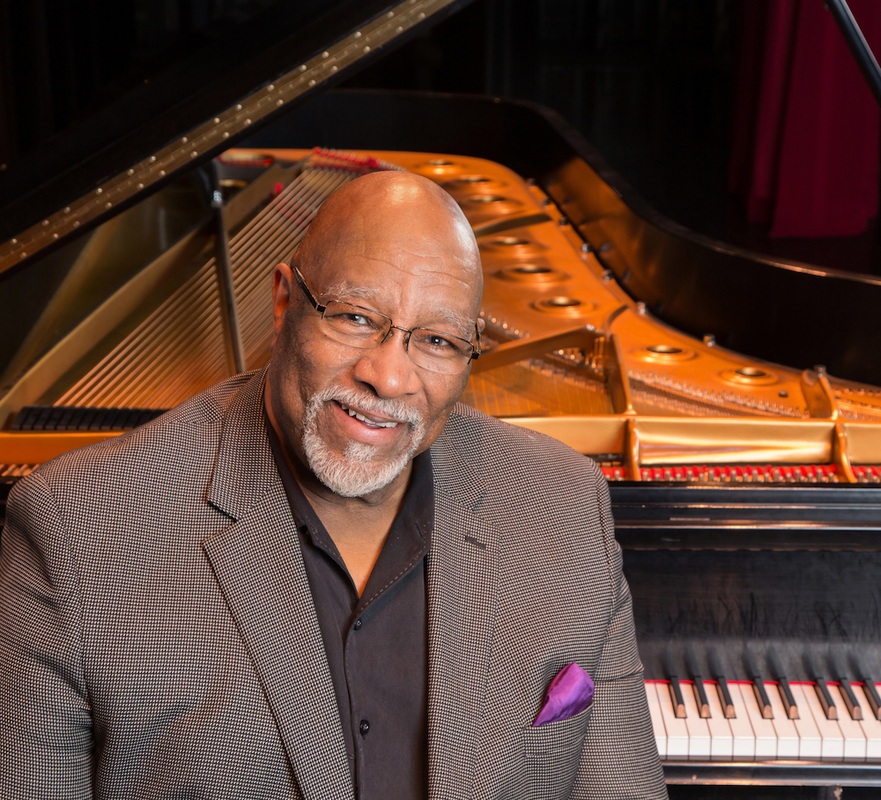 |
|

 RSS Feed

|

|

|

|

|

|
|
ARTISTS
|
RELEASES
|
SOCIAL
|
BCR
|

© 2003-2024 Blue Canoe Records & Blue Canoe Digital LLC.
All Rights Reserved